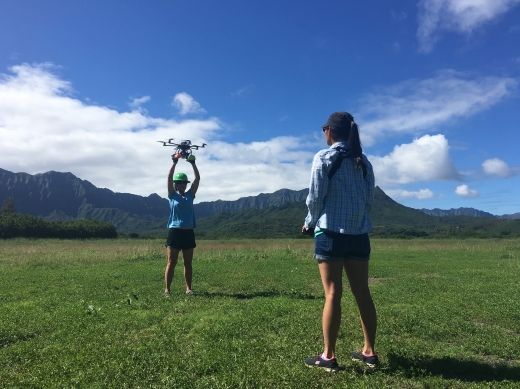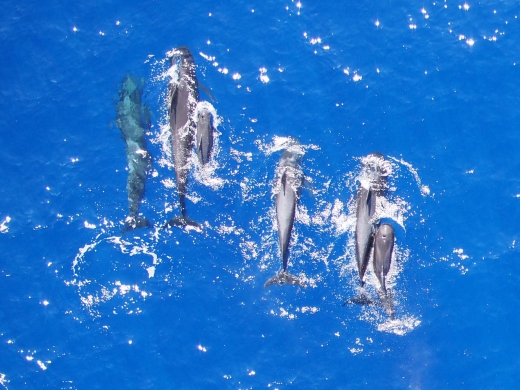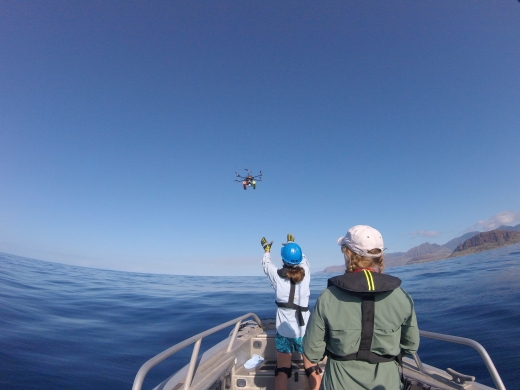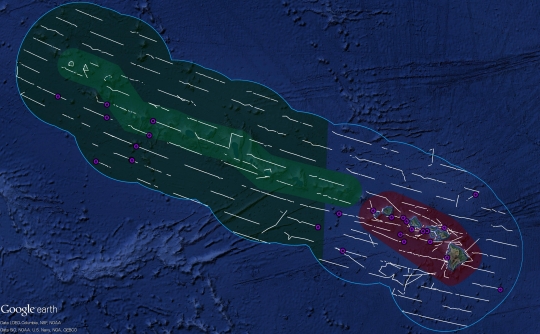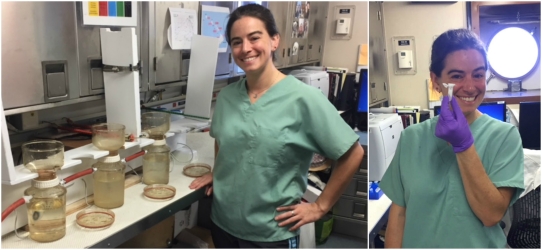
NOAA Science Operations and PIRO Monuments staff prepare for upcoming Mariana Archipelago Marine Ecosystem Science Implementation Workshop in Saipan.

The National Marine Fisheries Service Pacific Island Fisheries Science Center is partnering with the Pacific Islands Regional Office and Commonwealth of the Northern Marianas Islands (CNMI) and Guam natural resource agencies and the University of Guam to prepare for an upcoming science planning workshop to be held in Saipan from May 20-23. The workshop will focus on formulating a five-year (2014-2019) research implementation strategy to 1) address knowledge gaps and 2) contribute to existing baseline data on the linkages between biological, geophysical, and human components of the Marianas Archipelago Ecosystem (including the Marianas Trench Marine National Monument (MTMNM)).

The workshop planning committee has representatives from PIFSC in Saipan, Guam and Honolulu, from PIRO in Honolulu, from the Department of Fish and Wildlife and Department of Environmental Quality in Saipan, and the University of Guam. These members have met via phone on a weekly basis for the last several months to plan the agenda and assemble speakers and participants to attend the workshop. The planning committee invited speakers from CNMI, Guam, and Hawaii to present on a marine resource related topic in their area of expertise with an emphasis on the current state of knowledge as well as research needs about each topic. The presentations will be followed by a Panel Q&A in which panel members will address the following questions for each topic: What are the major threats to this topic and what information is needed to understand and manage for them? What are the human dimensions? Are there any mapping needs? Are there any other research needs?

The discussion will focus on the islands, shallow reefs, and banks of the Mariana Archipelago, including the area of the MTNMN referred to as the ‘Islands Unit.’ Scientists, educators, natural resources specialists, non-governmental entities involved in ocean science, archaeologists, and interested members of the community are invited.

NOAA Fisheries is also holding a 1 day add-on meeting for researchers, educators and natural resource managers in the Commonwealth of the Northern Marianas Islands and Guam that will provide a summary of NOAA’s spring 2014 Mariana Archipelago Research using the NOAA Research Vessel Oscar Elton Sette. The purpose of the session is to provide information on the ship’s capabilities and to discuss guidelines on how to submit research projects for consideration. Participants are encouraged to come prepared to discuss their project ideas.Agenda & Workshop Overview_MTMNM Workshop 05-16-13

Posted in Scientific Operations | Tagged , , , , , , , | Leave a comment

Don’t Panic! The reality of monk seal recovery in the main Hawaiian Islands (Part 1)

by Charles Littnan

Since monk seals, a species native and unique to Hawaii, reestablished themselves on Niihau in the 1970’s there has been a slow return of the seals to the rest of the main Hawaiian Islands (MHI).  This recolonization became more noticeable in the last decade particularly for residents of the more western MHI’s (Kauai, Oahu, Molokai) where seals are more abundant.  The current MHI population of monk seals is somewhere between 150 – 200 animals and is growing at about 6.5% per year.

KERMIT-Ko_Olina102409c(s)-BB

Monk seal at Ko Olina.

While this return to the MHI and continued growth of the seal population are good news for the seal, there is no doubt that the overlap of seals and people are causing some growing pains for ocean users, managers, and the seals themselves.  Everyone is shifting to a new reality and we are still pretty early in that process. There are also a number of understandable concerns about the return of seals to the MHI.  Some of the more common questions include, but are not limited to:  How will this affect my access to beaches?  How will this affect my fishing catch or my ability to bring food to my family?

But also with this change comes confusion, angst, animosity, and other unpleasant feelings which stoke fears of what things could look like in the MHI with an increase of seals.  Some of this confusion is due to a lack of information, but some may be due to people intentionally trying to instill fear in their community.  We’ve heard tales of a swarm of monk seals sweeping over the MHI with comparisons made to situations in California (see below).  Imagine not being able to find a few square feet to roll out your blanket on the sand for a Saturday BBQ because of a mass of snoozing monk seals at your local beach. Or imagine having to carefully thread your way through a small gang of furry sausages and trying not to ding them with the tail of your board as you tiptoe to your favorite surf break.  I agree that would be awful, but thankfully, that is not going to happen in Hawaii …ever.

These exaggerated ideas of a population explosion are getting in the way of important conversations needed to address the public’s concerns and of attempts to  find solutions to conflict between seals and people.  What might help everyone to understand what the future of monk seals in the MHI might look like, is a little bit of perspective.   This is a topic that has lots of interesting things to talk about so I have broken it up into a couple of blogs.

For the first piece we will just look at how many seals we are planning for as part of natural seal growth in the MHI and how this compares to another place that has some experience with recently increasing seal populations: California.  I will start with California, which has a number of seal and sea lion species that reside part-time or full-time along the coastline.  For this exercise, I am only going to focus on seals that occur consistently in California in significant numbers: harbor seals, elephant seals, Steller sea lions, and California sea lions (Table 1).

Table 1:  Global and statewide population sizes for pinnipeds in California.

Common Name

Scientific Name


Total Global Population Size


Population in California

California sea lion Zalophus californianus

355000

238,000

Harbor seal Phoca vitulina

500000

34000

Northern elephant seal Mirounga angustirostris

150000

124000

Steller sea lion Eumetopias jubatus

40000

500

 
Estimate of total seals in CA:

396500

Currently, there are almost 400,000 seals and sea lions in California. Four. Hundred. Thousand.  That is lot of seals and a whole lot of human-seal management problems, which will be touched on in the next blog.  But one important thing to note is that even with that massive population of seals in California, the ecosystem still functions; people still use the beach; people dive, surf, fish, recreate etc.

So, with that as a reference point, what does a recovered population of monk seals in the MHI look like?  What is the number of seals managers are projecting in the future?

500

That’s right.  The target MHI population size for the Hawaiian Monk Seal Recovery Plan is 500 individuals, or about 2.5 to 3 times the current population.  A graphical representation comparing the two states:

graph

Or, for those of you who prefer densities, here is another example of the very different situations between the states.  The total lengths of coastline are similar between California (840 miles) and Hawaii (750 miles); however, the average number of seals per mile of coastline is dramatically different.  There are an average of 472 seals for every mile of coast in California. When the monk seal population reaches 500 seals there will be an average of 0.7 seals every mile.

Of course, seals don’t haul out evenly and some species aggregate in large numbers.  Pier 39 in San Francisco is a great example often raised in our Hawaii public meetings.  In January 1990, small groups of sea lions (from 10 – 50) started hauling out on available dock space at Pier 39, taking advantage of plentiful herring and the marina’s protected environment.  The population grew to more than 300 within a few months and now each winter the population can increase to  ~900 sea lions.  Most of the sea lions that haul out at Pier 39 are male, and many, but not all, leave during the summer months.   The image below shows sea lions at Pier 39 and is often presented as the inevitable outcome of monk seal growth in the MHI…but is it?

Pier39

Picture of the California sea lions hauled out on docks at Pier 39, San Francisco. Aggregations of mostly male sea lions can top 900 individuals at times. Sometimes monk seal populations in the MHI top 9 individuals. As a side note, there are more sea lions in this photo than there are monk seals in all of the MHI.

Monk seals, even at their peak population will not aggregate in the way that sea lions (or harbor seals) do.  Monk seals tend to occur in groups of only 1 or 2 individuals, though on rare occasion, and in remote areas, you may see groups between 5-10 animals.  This more solitary existence of monk seals relative to sea lions is due in part to differences in the species’ social structures and reproductive behaviors.  Some seal species’ reproductive cycles are driven by the environment.  It is safest for mothers to give birth and suckle their offspring in spring and summer, during good weather, and so females time their cycle to the seasons.  This means that most females in a population are coming to shore around the same time and, therefore, are ready to mate around the same time as well. This encourages males to come ashore to gain access to those reproductive females.  Large numbers of animals vying for access to females lead to complex social interactions and dominance hierarchies being formed and voila…you have the makings of a colony!  These social aggregations stretch outside the breeding season as well, which is why you see situations like Pier39 with young males hanging out en masse.

Monk seals on the other hand, are very different.  Due to their tropical environment, monk seals are not as tightly constrained by seasons.  They can give birth at anytime during the year (though most births are still between March and August) and thus a female can be ready to mate any time.  So it is in a male’s best interest to keep swimming and looking for a potential female.  This creates a much weaker social structure and discourages the formation of colonies.  So when you see larger numbers of seals in one location in the MHI it is probably due to the fact it is some place they aren’t chronically harassed.  It is more a desire to rest and be safe, than a need to socialize that encourages these small groupings.

fig2

A rare “large” group of monk seals on a remote coast of Molokai. If monk seals aggregate in the MHI it is generally in places that are remote and difficult for humans to access and harass them.

So the fear that our beaches will be over run by monk seals is not founded in fact.  Monk seal numbers may go over 500 but they will never be in the thousands, much less the hundreds of thousands.  And when we do reach our 500 seal mark for the MHI, their biology and reproductive behavior will prevent dense aggregations appearing anywhere.

Posted in Protected Species Division (PSD) | Leave a comment

Researchers complete surveys of coral disease off the north shore of Kaua`i

By Bernardo Vargas-Ángel

Members of the benthic team of the PIFSC Coral Reef Ecosystem Division (CRED) returned to Honolulu on May 8 from a week-long deployment on Kaua`i, where they conducted surveys as part of a project funded by PISFC and NOAA’s Coral Reef Conservation Program (CRCP) to better understand the prevalence and spatial distribution of an outbreak of bacterial coral disease that was reported in 2012 for areas off the north shore of Kaua`i.

Benthic team member and NOAA diver Hatsue Bailey conducts coral disease surveys using the belt-transect method on May 4 in Hanalei Bay, Kaua`i. NOAA photo Bernardo Vargas-Ángel

Benthic team member and NOAA diver Hatsue Bailey conducts coral disease surveys using the belt-transect method on May 4 in Hanalei Bay, Kaua`i. NOAA photo by Bernardo Vargas-Ángel

A 4-member team of CRED scientists—Hatsue Bailey, Matt Dunlap, Brett Schumacher, and Bernardo Vargas-Ángel—conducted surveys on April 30–May 7 at 36 sites in Hanalei Bay, Wainiha Bay, and `Anini Reef to acquire detailed data on demographics and health conditions of coral communities in these areas. This survey effort expanded and complemented the investigations already undertaken by Thierry Work, PhD, of the U.S. Geological Survey (USGS), and Greta Aeby, PhD, of the Hawai`i Institute of Marine Biology (HIMB), University of Hawai`i at Mānoa. The team completed belt-transect surveys at predetermined reef locales and sites, which were selected in consultation with scientists from partner agencies, the USGS and HIMB, as well as with other local experts. The data from these surveys will be used to provide the basis for quantitative estimates of disease prevalence. These surveys and their data are congruent with current, historical, and future coral reef monitoring activities conducted and data collected by CRED in the main Hawaiian Islands and Pacific-wide under the auspices of the CRCP’s National Coral Reef Monitoring Program.

Semicircular areas of rapid tissue loss, infected with filamentous bacteria on a colony of the rice coral Montipora patula, as seen in this photo taken on May 6 on `Anini Reef, Kaua`i. These areas are characteristic of the disease outbreak event currently developing on coral reefs along the north shore of Kaua`i. NOAA photo Bernardo Vargas-Ángel

Semicircular areas of rapid tissue loss, infected with filamentous bacteria on a colony of the rice coral Montipora patula, as seen in this photo taken on May 6 on `Anini Reef, Kaua`i. These areas are characteristic of the disease outbreak event currently developing on coral reefs along the north shore of Kaua`i. NOAA photo by Bernardo Vargas-Ángel

Preliminary findings from these surveys corroborate the occurrence of disease “hotspots” within each of the reef systems surveyed and confirm the unique nature of this event. We’d like to extend special thanks to Thierry Work, Greta Aeby, and Eyes of the Reef volunteer Terry Lilley for sharing their knowledge regarding this outbreak and making our mission a complete success. We look forward to fostering these and other collaborations as we continue to work together for the betterment of reefs in Hawai`i and the larger Pacific Islands region.

Posted in Coral Reef Ecosystem Division (CRED) | Tagged , , , , , , , , , , , , , , , , , , , , , , , , , , , , , , , , , , , , | Leave a comment

Dispersal, habitat use, and behavior of neonate sea turtles in South Atlantic Ocean

Classic loggerhead turtle (Caretta caretta) early ocean dispersal models focus solely on the northern Atlantic and the North Atlantic Subtropical Gyres. Little is known about hatchling and oceanic stage sea turtle dispersal in the southern Atlantic where the offshore ocean circulation changes from south to north over the course of each hatching season. This differs from the western North Atlantic where the Gulf Stream dominates the oceanographic ‘landscape’. This study uses neonate loggerhead tracking data from the north Atlantic to compare with tracking data from tracked oceanic-stage turtles in the southern Atlantic. The researchers aim to determine if a similar gyre-based dispersal pattern occurs within the South Atlantic Subtropical Gyre, and to determine the likelihood of genetic connectivity with northern sea turtle Distinct Population Segments.

Sea Turtles are protected under the Endangered Species Act.  This woman has a permit to hold this turtle. Please do not handle wild sea turtles.

All sea turtles species are protected under the Endangered Species Act and require a federal permit to handle them.  Please do not handle wild sea turtles.

Neonate Sea Turtle swimming with satellite transmitter.

Neonate Loggerhead sea turtle (Caretta caretta) swimming with satellite transmitter.

Yonat Swimmer (NMFS PIFSC-FRMD) along with Co-PIs, Dr. Kate Mansfield (NMFS, Southeast Fisheries Science Center), Dr. Nathan Putman (Oregon State University), Gustave Lopez, Neca Marcovaldi and Milagros Lopez (TAMAR, Brazilian sea turtle research and conservation organization) placed solar-powered satellite transmitters to track the horizontal movements of neonate loggerhead sea turtles (Caretta caretta) released off of the eastern Atlantic coast of Brazil. The project uses ocean circulation models and passive drifters released at the same time as the turtles to model turtle distribution and habitat use in the South Atlantic Ocean.  To date the project has supported three trips deploying about seven neonate turtles and two passive drifters per trip since January 2013.  Images above depict the size of turtle released and transmitter images.

Posted in Fisheries Research and Monitoring Division (FRMD) | Leave a comment

Scientists continue surveys of a marine protected area in Maui

By Kevin Lino
Schools of fish swim over a healthy reef off Ka`anapali, Maui, on April 23 during a mission in the Kahekili Herbivore Fishery Management Area. Photo by Darla White, Hawaii Division of Land and Natural Resources

Schools of fish swim over a healthy reef off Ka`anapali, Maui, on April 23 during a mission in the Kahekili Herbivore Fisheries Management Area. Photo by Darla White, Hawai`i Division of Land and Natural Resources

To help assess the effectiveness of an unusual approach to management of marine resources in Hawaii, our team spent the week of April 22 conducting underwater surveys of fishes and benthic habitat along the coastline of West Maui in the Kahekili Herbivore Fisheries Management Area (KHFMA). This diving effort, funded in part by NOAA’s Coral Reef Conservation Program, continued a partnership between the PIFSC Coral Reef Ecosystem Division (CRED) and the Maui office of the Division of Aquatic Resources, Hawai`i Department of Land and Natural Resources (DLNR).

During this mission, we completed 99 surveys in the nearshore (depths <18 m) reef habitats of the KHFMA in just 4 days of diving. CRED divers Ivor Williams and I paired with staff and volunteers from the DLNR to conduct surveys. Each team consisted of one diver focused on fish surveys and one diver focused on benthic surveys. Divers donned thick wetsuits for the long dives necessary to swim along multiple transects and identify, size, and count fish species, identify and count sea urchins, and collect benthic imagery for later analyses. With several sea turtle cleaning stations, a passing manta ray, and sections of gorgeous reef before us and the songs of humpback whale in the background during our surveys, it was inconceivable to not want to collect data needed to monitor marine life in areas like this one in our beautiful state.

The stunning color and spines of the red slate pencil urchin (Heterocentrotus mammillatus) stand out on a reef off West Maui. Sea urchins are protected in the Kahekili Herbivore Fishery Management Area. NOAA photo by Kevin Lino

The stunning color and spines of the red slate pencil urchin (Heterocentrotus mammillatus) stand out on a reef off West Maui. Sea urchins are protected in the Kahekili Herbivore Fisheries Management Area. NOAA photo by Kevin Lino

The state of Hawai`i created the KHFMA along a stretch of coastline approximately 3 km long in Ka`anapali, West Maui. The KHFMA, which was established in July 2009, involves a form of management that is unique in Hawai’i, namely protection of coral reef herbivores (e.g., surgeonfishes, parrotfishes, chubs, and sea urchins), which may not be killed, injured, or harvested within the boundaries of this fisheries management area. The purpose of the KHFMA is to restore natural grazing processes and ultimately increase the local reef’s ability to resist and recover from excessive algal growth that is detrimental to corals. To further promote grazing by local fish stocks, feeding of fishes, other than for legal fishing, also is banned within the KHFMA. The KHFMA does not in any way restrict fishing of other types of fishes or invertebrates.

The yellow tang (Zebrasoma flavescens), as seen in the photo above taken on a reef off West Maui, is an example of the fishes protected in the Kahekili Herbivore Fishery Management Area. NOAA photo by Kevin Lino

The yellow tang (Zebrasoma flavescens), as seen in the photo above taken on a reef off West Maui, is an example of the fishes protected in the Kahekili Herbivore Fisheries Management Area. NOAA photo by Kevin Lino

Although uncommon, this dynamic, targeted management approach appears to be much more acceptable to the public compared to measures of full closure. Therefore, if proven effective as a means of restoring herbivorous fish populations and preventing coral-to-algal phase shifts, this approach has great potential for management of other areas in Hawai`i and beyond.

Another positive part of this project is the hard work and cheerfulness of our DLNR partners, especially Darla White, who always impresses us with her dedication, organization, and enthusiastic outreach efforts. As visitors snorkeled above (and sometimes within) our shallower surveys, I hoped they enjoyed their time in the water, whether or not they knew how our long days and tough work monitoring the area might have been enhancing their experience. After participating for several years in this biannual survey, I find it rewarding to know that the research we conduct there contributes to the evaluation of the effectiveness of this marine protected area.

Posted in Coral Reef Ecosystem Division (CRED) | Tagged , , , , , , , , , , , , , , , , , , , , , , , , , , , , , , , , | Leave a comment

Research Project SE1302 NOAA RV Oscar Elton Sette

OLYMPUS DIGITAL CAMERA

The SE1302 project aboard the NOAA research vessel Oscar Elton Sette was recently completed after 15 days of work off the western coast of Maui (15-29 April, 2013). This project was the latest in the series of deepwater bottomfish calibration (also termed methods comparison) research projects, and had several objectives: 1) orchestrate a multi-vessel, multi-gear intensive survey of deepwater bottomfish using Sette-based active acoustics (Simrad EK60 operating at 4 frequencies), Sette-based AUV (SeaBED with stereo-camera optics and BlueView sonar imaging), partner vessel BotCam deployments (Huki Pono from Sea Engineering chartered by UH Oceanography), and partner vessel bottomfishing (PIFG charter vessels Hokuloa, Imua, and Naomi K); 2) evaluate alternate acoustic calibration methodologies (shallow-water mooring buoy, single-point anchored, and drifting in deep water); 3) evaluate the use of the over-the-side-pole (OTSP) for acoustic surveys to minimize bubble interference as observed using the hull mounted transducers; and 4) ground truth acoustic targets using Sette-based ROV and fishing operations conducted simultaneous with active acoustics. Most of the objectives were accomplished in a small series of 6 pairs of survey grids located off West Maui (6 survey locations denoted A-F below, with pairs 1, 2 for each A-F). These locations were chosen based on feedback from the local fishing community, prior calibration cruise surveys, climatological patterns of weather, and proximity to small vessel port (Maalaea Harbor).

SE1302 Grid Cell closeup_12

The research project was fully successful on all 4 objectives despite occasional challenges such as AUV mechanical issues and placement of and locating suspended acoustic calibration sphere. Notably, SE1302 was the first calibration cruise to successfully deploy all 4 survey gears (active acoustics, AUV, BotCam, and fishing) on a single trip. The project also made significant breakthroughs in understanding the acoustic calibration process from the Sette and identifications of potential improvements. The OTSP has great promise for improving acoustic surveys in a wider variety of sea conditions. And lastly during the project there were observations of at least 2 species of fish (opelu and opakapaka) with the navigational camera aboard the ROV, and Sette-based fishing operations captured at least 6 species of fish (opelu, opakapaka, kalekale, ehu, taape, reef shark), while at the same time using active acoustics on the Sette. These ground-truthing data points will be extremely valuable towards helping decipher species identification from the sometimes nebulous acoustic data.

IMG_2019

vlcsnap-2013-04-28-09h42m23s235

IMG_1977

IMG_1989

The SE1302 project was a very large collaborative effort between multiple research groups at PIFSC (Ecosystems and Oceanography Division, Fisheries Research and Monitoring Division, Coral Reef Ecosystem Division, Directors Office Scientific Operations, and Operations, Management and Information Division), as well as partners from the Northwest Fisheries Science Center, University of Hawaii Department of Oceanography, Hawaii Institute of Marine Biology, University of Hawaii Joint Institute for Marine and Atmospheric Research, Pacific Islands Fisheries Group, Sea Engineering, State of Hawaii Department of Land and Natural Resources, and NOAA Teacher-at-Sea Program. Colleagues from the University of Miami and Woods Hole Oceanographic Institute were also involved in the planning and preparation for SE1302.

IMG_2342

Posted in Coral Reef Ecosystem Division (CRED), Ecosystems and Oceanography Division (EOD), Fisheries Research and Monitoring Division (FRMD), Operations Management and Information Division (OMI), Scientific Operations | Leave a comment

PIFSC Barbless Circle Hook Project Joins the 9th Annual Lanai Keiki Catch Fishing tournament

The 9th Annual Lanai Keiki Catch fishing tournament was held this weekend.  The camp sites on the beach at Hulupoe Bay (Manele Bay) started filling up from Friday afternoon as families of the keiki anglers chose their camping and fishing spots.  Friday night was the first chance the kids got to fish and the harbor was the place to go for most of the excited anglers.  They all checked in early and got their donated live catch buckets and aerators/batteries for the conservation themed event.   There were many catches of all kinds of fishes and eels and prizes awarded to some of the lucky anglers.  For those not as lucky, there was a free raffle prizes for the rest.  Every family who participated went home a winner with new stories and experiences gained from the family time spent together.   For a look at pictures from the annual event please visit the Barbless Circle Hook Facebook page at https://www.facebook.com/barblesscirclehook.

The tournament was put on by Kim Massey – Maui Police Department, George Purdy – Maui Fire Department and Nalani Silva of the Four Seasons Resorts, and a whole host of volunteers.  The Pacific Islands Fisheries Group (PIFG) generously donated some Lawaia magazines containing the story of how the Lanai Keiki Catch tournament began (authored by George Purdy) for distribution at the tournament.  Donations from many local stores (including off-island tackle shops), PIFG, and businesses made this an exciting event and learning experience for the kids.  Thanks for inviting the PIFSC Barbless Circle Hook Project to share in the experience again.  We are looking forward to next year’s 10th Anniversary tournament which is sure to be extra special; especially since after reading the article in Lawaia the Four Seasons Resorts and new Lanai owner Ellison have pledged to support next year’s tournament.

Additional education on the barbless circle hooks can be found at http://www.pifsc.noaa.gov/barbless_circle_hook/faqs_and_howtos.php

Additional education on the barbless circle hooks can be found at http://www.pifsc.noaa.gov/barbless_circle_hook/faqs_and_howtos.php

Introduced to Oahu in 1956 from the Society Islands. It seems like the population of roi are on the rise similar to how the taape had their population boom decades ago. Perhaps it is now the roi population's turn to expand until it finds a sustainable level at which time its population be in synch with what the nearshore environment can handle.

Introduced to Oahu in 1956 from the Society Islands. It seems like the population of roi are on the rise similar to how the taape had their population boom decades ago. Perhaps it is now the roi population’s turn to expand until it finds a sustainable level at which time its population be in synch with what the nearshore environment can handle.

It was a beautiful day for fishing! Congratulations to all the keiki anglers who participated!

It was a beautiful day for fishing! Congratulations to all the keiki anglers who participated!

A community that fishes together.....

A community that fishes together…..

Posted in Fisheries Research and Monitoring Division (FRMD) | Leave a comment

Oceanographic study defines climatological ranges and anomalies for Pacific coral reef ecosystems

Jamison Gove and Oliver Vetter of the oceanography team of the PIFSC Coral Reef Ecosystem Division (CRED) and partners at the Scripps Institution of Oceanography of the University of California San Diego, NOAA’s Coral Reef Watch, and the University of Hawai`i at Mānoa have authored a paper recently published in PLoS ONE that presents the results of their work to develop a method to generate consistent and comparable climatological data for the U.S. Pacific coral reef ecosystems surveyed by CRED as part of the Pacific Reef Assessment and Monitoring Program.

Coral reefs are exposed to a range of environmental forcings that vary on daily to decadal time scales and across spatial scales that span from reefs to archipelagos. Environmental variability is a major determinant of the structure and function of reef ecosystems, including coral reef extent and growth rates and the abundance, diversity, and morphology of reef organisms. Proper characterization of environmental forcings on coral reef ecosystems, therefore, is a critical step toward understanding the dynamics and implications of abiotic–biotic interactions on reef ecosystems.

To quantify environmental forcings on coral reefs, this recently completed study combines high-resolution bathymetric information with modeled wave data and remotely sensed data of sea-surface temperature, chlorophyll-a concentration, and irradiance. Study results indicate considerable spatial heterogeneity in climatological ranges and anomalies across the 41 islands and atolls for which data were examined, with emergent spatial patterns specific to each environmental forcing. For example, wave energy was greatest at northern latitudes and generally decreased with latitude. In contrast, chlorophyll-a concentration was greatest at reef ecosystems proximate to the equator and at northern-most locations, showing little synchrony with latitude. In addition, the coral reef ecosystems with the highest chlorophyll-a concentrations—Jarvis, Howland, Baker, Palmyra and Kingman—are all uninhabited and characterized by high cover of hard corals and large numbers of predatory fishes. Metrics developed for this study will help to identify reef ecosystems most exposed to environmental stress and systems that may be more resistant or resilient to future climate change.

Long-term means in (A) sea-surface temperature, (B) wave energy, (C) chlorophyll-a concentration, and (D) irradiance in coral reef ecosystems across the U.S. Pacific.

Long-term means in (A) sea-surface temperature, (B) wave energy, (C) chlorophyll-a concentration, and (D) irradiance in coral reef ecosystems across the U.S. Pacific.

Gove JM, Williams GJ, McManus MA, Heron SF, Sandin SA, Vetter OJ, Foley DG.
2013. Quantifying climatological ranges and anomalies for Pacific coral reef ecosystems. PLoS ONE 8(4): e61974. doi:10.1371/journal.pone.0061974

Posted in Coral Reef Ecosystem Division (CRED) | Tagged , , , , , , , , , , , , , , , , , , , , , , , | Leave a comment